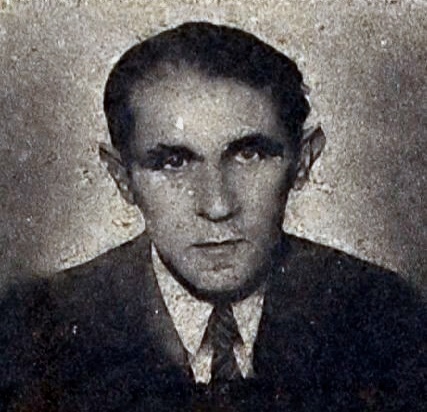
Bruno Schulz: Poland’s Greatest Writer
“As we manipulate everyday words, we forget that they are fragments of ancient and eternal stories, that we are building our houses with broken pieces of sculptures and ruined statues of gods as the barbarians did.”
– Bruno Schulz
Bruno Schulz’s name is often tied to his more famous influences. Known as both the Polish Proust and Polish Kafka, Schulz has been historically written about in a way that diminishes his own creative genius and contributions to literature. Writing two volumes of prose and a few other short pieces, his body of work is small, but powerful. Schulz occupies a very unique cultural background, born in 1892 in what is now Ukraine, he wrote in Polish through the lens of the Jewish Tradition. While it is clear that his literary influences were important to him and his work, I want to give space for Bruno Schulz as a creative in and of himself, away from the nicknames of his famous compatriots.
Schulz’s body of work is expansive and includes more than just his fiction. He wrote on philosophy, literary criticism and theory, and was an artist who painted, drew, and did graphic design.1 His writing is whimsical, taking a more creative and nurturing approach to his characters than his idol Kafka. Perhaps influenced by his artistic abilities, his writing is described by one scholar as “vivid (with) color and expressionistic images.”2 Schulz’s work was heavy in color and symbolism, giving us a whimsical view into his stories. This contrasts in the time that he was writing in, during the occupation of Poland in World War II. Interestingly, the setting for Schulz’s work is almost exclusively in his hometown of Drohobych, giving us a juxtaposition between the external reality of his war-stricken home, and the colorful internal of his fictional world.
The ideas of myth and metaphor were of much significance to him in both his fiction and philosophical texts. Inspired by another one of his influences, Thomas Mann, Schulz’s use of metaphor differs from the strict and biblical accuracy of Mann. Schulz is creative in his mythology, displaying an almost childlike naivete and liberty in his mythology.3 Similarly in his philosophy, the idea of myth in relation to the artist plays a crucial role for Schulz, as described here by Eugenia Prokop-Janiec, an associate professor of Polish literature, “He saw metaphor as the kernel of myth and believed the main task of art was to return to its mythical roots in order to restore the unity of the vision of the world as a cosmos.”4 For Schulz, metaphor is a way to connect ideas from different worlds. The idea of reality is not a constant, it is blurred with space and time and color. His worlds are vivid, incorporating his Polish-Jew background with complex metaphors and imagery. His work is singular, it is his own, not that of his influences.
Schulz died in 1942, dying in his hometown of Drohobych after being shot by a Nazi soldier. While his body of work is small, his influence is undeniable. Schulzis is remembered as one of the most influential Polish writers of all time.
Schulz as a Modernist:
Deciding to write about Bruno Schulz was an easy decision, despite him being more canonized than others in the project. His identity as a Polish Jew who wrote in Polish (he did not know Yiddish or Hebrew) during World War II was fascinating. As well as the fact that he occupied multiple creative sectors, he seemed an enigmatic artist occupying a crucial historical perspective. But what made me want to write about him even more was his attachment to the authors he loved. Every article seemed to mention his obsession with Proust and his Kafkaesque writing style, offering analyses of how his writing was connected to each. It was strange to me that scholars were offering up such detailed comparisons to other authors, while also giving a description of Schulz’s writing that seemed so unique from anything I had ever read. His imagery is one of a kind, his philosophy and mythology original. It seemed a shame to me that his name is often tied to those who came before him, that there was little room for him as an original, one of a kind author. I hope I was able to show his singularity in my short biography, but if not, links to his work can be found here, as he will no doubt be better at explaining his deserving place in literature than I am.
As for his classification as a modernist, it seems to me an obvious conclusion that he should be included in the movement. His experimentation with myth, time and reality, along with his fluid and dream-like writing style have all the classifications of a modernist. While his canon is small, it is still an important part of Polish literary history, as well as to the movement of modernism as a whole.
To read his work in the Public Domain, follow this link.
Bibliography
Brown, Russell E. “Bruno Schulz and World Literature.” The Slavic and East European Journal 34, no. 2 (1990): 224–46. https://doi.org/10.2307/309147. (225)
Natalia Matorina. “Innovative, Traditional, and Classic-Innovative Forms of Popularization of the Literary Heritage of Bruno Schulz.” Вісник Харківського Національного Університету Імені В. Н. Каразіна. Серія Філологія. Vìsnik Harkìvsʹkogo Nacìonalʹnogo Unìversitetu Ìmenì V.N. Karazìna. Serìâ Fìlologìâ, no. 93 (December 1, 2023): 48–56. doi:10.26565/2227-1864-2023-93-07
Prokop-Janiec, Eugenia. 2010. Schulz, Bruno. YIVO Encyclopedia of Jews in Eastern Europe. https://yivoencyclopedia.org/article.aspx/Schulz_Bruno (accessed July 22, 2024).
- Natalia Matorina. “Innovative, Traditional, and Classic-Innovative Forms of Popularization of the Literary Heritage of Bruno Schulz.” Вісник Харківського Національного Університету Імені В. Н. Каразіна. Серія Філологія. Vìsnik Harkìvsʹkogo Nacìonalʹnogo Unìversitetu Ìmenì V.N. Karazìna. Serìâ Fìlologìâ, no. 93 (December 1, 2023): 48–56. doi:10.26565/2227-1864-2023-93-07 ↩︎
- Brown, Russell E. “Bruno Schulz and World Literature.” The Slavic and East European Journal 34, no. 2 (1990): 224–46. https://doi.org/10.2307/309147. (225) ↩︎
- Brown, Russell E. “Bruno Schulz and World Literature. ↩︎
- Prokop-Janiec, Eugenia. 2010. Schulz, Bruno. YIVO Encyclopedia of Jews in Eastern Europe. https://yivoencyclopedia.org/article.aspx/Schulz_Bruno (accessed July 22, 2024).
↩︎
 The Underrepresented Modernism Project.