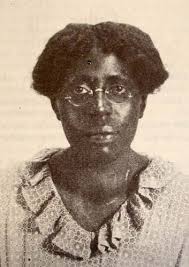
Anita Scott Coleman: Forgotten Writer of The Harlem Renaissance
God is an Indian–He loves gay color so . . .
Red, yellow, purple, oranges and blue
Are in the sky at sunset; at the sunrise, too.
God is Irish–He likes green color best.
All the trees and grasses in green garments oft-times dress.
God is Saxon, stern and cold.
For snow is white and ice is cold.
The downy clouds are white. And a
White moon peeks; when lovers pledge their truth.
Cotton is white and snowy lambkin’s fleece.
God is African–for night is robed in black.
The twinkling stars are black men’s eyes.
The black clouds, tempests tell.
While little seeds of flowers birthed are
Tans and brown and black. . . .
-The Colorist, Anita Scott Coleman
Anita Scott Coleman is one of the most singular authors I have had the pleasure of learning about. She occupies both an important place in history, in a unique location. She offers us a view into the lives of African Americans during The Harlem Renaissance that nearly no one else did. She was prolific, writing for over thirty years, hailed by her colleagues as one of the greatest Negro writers.1 Her writing on war and peace has been all but ignored by scholars.
Coleman was born in 1890 in Mexico, but would move to New Mexico and spend the majority of her childhood on a Ranch in the small town of Silver City. Her family had unique ties to American History, and like many African American families, had lived all over the country.2 The influence her ancestors had on her writing is undeniable, and lends us a look at what many other family histories were like. Both her connection to her family and her location in the Southwestern United States make her unique, as she was one of very few Black authors to be writing about the Black experience from the Southwest. In 1926 her, her husband and their five children moved to LA, she no longer worked outside the home but was able to continue writing.3 After she moved to LA, she moved away from fiction into poetry, one of only a very few writers to win awards in three genres: fiction, essay, and poetry.
Her work is expansive, covering the experiences of ordinary people. Her stories follow well written black characters, her stories are complex, she affords her characters complexities and rich personalities.4 She wrote extensively about African American men in difficult situations, often being unable to find employment, specifically in agriculture.5 Much of her writing deals with social justice and racism much of which is still relevant today, lynching, joblessness, underemployment and urbanization.6 As well as writing about the Black experience, much of her writing includes complex female characters. She often presents her female characters in traditional roles, but she does not limit them in terms of their characters. She offers a wide variety of women, some good, some bad. Young notes however, that Coleman does not use her writing as a place to challenge the systems of oppression that contain her characters. She is not pushing back against these norms, but rather, humanizes her characters. Coleman gives us a glimpse into the ordinary lives of African Americans at the time. She shows us characters who are flawed and complex trying to make a living. While other Black authors at the time were focused on elevating the idea of whiteness to gain social acceptance, or focused on combating racism through social justice, it seems this was not Coleman’s goal. Her writing offers no solutions to racial problems, perhaps a reason why she has been forgotten as a prominent figure during the Harlem Renaissance.
She continued to write up until her death in 1960. While largely unknown to modern audiences, she occupied a unique place in history. Her work allows us a look into the experience of the average Black family of this crucial time in United States History.
Anita Scott Coleman as a Modernist
While the Harlem Renaissance is a distinctly Modernist movement, it has been historically categorized as a separate entity. While modern scholars are quick to assert that it should be included as part of Modernism, this was not the case for years. Similarly, Anita Scott Coleman’s work occupies both groups, however, perhaps due to her geographic location or the subjects of her writing, she has been forgotten by both groups.
Like many other writers on this list, her focus on the ordinary person and their lives may have something to do with her non-canonization. Her fellow authors in Harlem were focused on solving social justice problems, on filing solutions to the racism they experienced. This was never Coleman’s goal. Along with her distinctly Southwestern perspective, she was clearly a unique author of her time. It is important that the writers of the banal, of the everyday, do not go unnoticed. They offer us an important historical perspective, that if was not clear enough, is easily forgotten. Especially in a time of political and social turmoil that the United States faces, studying the stories of African American families highlights where this country came from, and either how far, or little, we still have to go.
While researching her, it came to my attention that every article described her as a “neglected author of the Harlem Renaissance,” while also discussing how well respected and thought she was during her time. She won many awards and accolades, she took risks with her writing and characters, things that should have better cemented her name in literature.
To view her work in the Public Domain, follow this link.
Bibliography
Davis, Cynthia, and Verner D. Mitchell. 2010. “Anita Scott Coleman: A Western Writer of the Harlem Renaissance.” Journal of the West 49 (1): 24–33. https://search-ebscohost-com.libproxy.scu.edu/login.aspx?direct=true&db=31h&AN=58546386&site=eds-live.
Mitchell, Verner D. 2008. “A Family Answers the Call: Anita Scott Coleman, Literature, and War.” War, Literature & the Arts: An International Journal of the Humanities 20 (1/2): 301–9. https://search-ebscohost-com.libproxy.scu.edu/login.aspx?direct=true&db=mlf&AN=EIS36987000&site=eds-live.
Young, Mary E. “ANITA SCOTT COLEMAN: A NEGLECTED HARLEM RENAISSANCE WRITER.” CLA Journal40, no. 3 (1997): 271–87. http://www.jstor.org/stable/44324976.
- Mitchell, Verner D. 2008. “A Family Answers the Call: Anita Scott Coleman, Literature, and War.” War, Literature & the Arts: An International Journal of the Humanities 20 (1/2): 301–9. https://search-ebscohost-com.libproxy.scu.edu/login.aspx?direct=true&db=mlf&AN=EIS36987000&site=eds-live.
↩︎ - Mitchell, “A Family Answers the Call” ↩︎
- Mitchell, “A Family Answers the Call” ↩︎ ↩︎
- Young, Mary E. “ANITA SCOTT COLEMAN: A NEGLECTED HARLEM RENAISSANCE WRITER.” CLA Journal40, no. 3 (1997): 271–87. http://www.jstor.org/stable/44324976. (283)
↩︎ - Young, Mary E. “ANITA SCOTT COLEMAN (284)
↩︎ - Young, Mary E. “ANITA SCOTT COLEMAN (284)
↩︎
 The Underrepresented Modernism Project.
